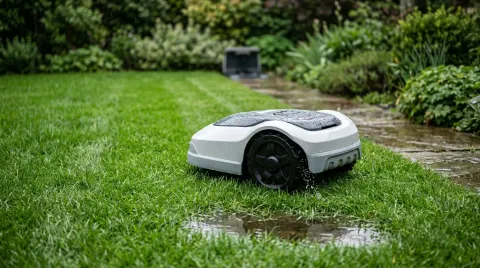
Every major brand compared on published specs, owner reports and expert reviews, plus step-by-step fixes for when your mower loses its signal, gets stuck or won’t go back to its station.
Our shortlist of wire-free robot mowers, ranked on published specs, independent reviews and owner reports, with a pick for steep lawns, shaded yards, big properties and small budgets.
Wire-free robot mowers with a list price of $2,000 or less, ranked on published specs, reviews and owner reports, from $799 small-lawn models to LiDAR and all-wheel drive.
Wire-free robot mowers ranked on how they find their way (LiDAR, network RTK or cameras), what you still have to install, and how they cope with slopes and trees.
Published
Popular comparisons
Side-by-side specs and a clear winner for each kind of yard.
Two LiDAR mowers for smaller lawns: the Ecovacs GOAT O1000 LiDAR PRO with its edge trimmer, and the Mammotion YUKA mini 2. Navigation, edges, slopes, published specs and price compared.
Mammotion's LiDAR, AWD LUBA mowers against Husqvarna's EPOS Automower iQ series: navigation, slopes, warranty, support and price compared from published specs and reviews.
The two biggest wire-free mower brands compared model by model: navigation, slopes, lawn size, cutting, warranty and price, from the Navimow i206 AWD to the LUBA 3 AWD 5000.
The way a robot mower finds its way decides what you install, whether it copes with trees, and how much it costs. Here is each technology in plain terms, with the models that use it.
eufy's camera-only robot mower needs no wire, RTK or antenna. We compare its published specs and eufy's own limits with what reviewers found on real lawns.
Dual LiDAR, no wire or antenna, and a string-trimmer head that trims the lawn's edges. We compare the GOAT A3000 LiDAR PRO's published specs with what reviewers found after weeks of use.
Navimow's four-wheel-drive flagship is rated for 84% slopes and uses free network RTK with 360° vision. We compare its published specs, the X430 and X450, and what reviewers found.
Mammotion's flagship combines 360° LiDAR, network RTK and two cameras with all-wheel drive for 80% slopes. We compare its published specs, its three sizes and what reviewers and owners report.
Published
Fix your mower
Brand-by-brand troubleshooting that gets you mowing again.
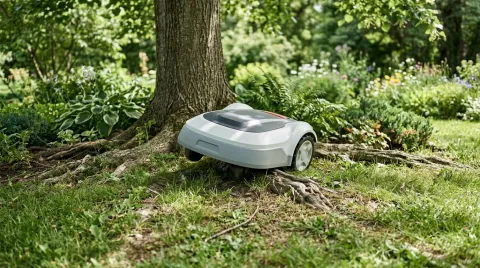
Soft ground, exposed roots, low objects, narrow passages and long grass are the usual reasons a robot mower gets stuck. How to free it safely, and how to change the lawn or the map so it stops happening.
A robot mower that won't charge usually has no power at the station, a loose or damaged cable, dirty charging contacts, a badly placed station or a battery that is too hot or too cold. Here's how to tell which.
What Mammotion's Fix, Float and Single statuses mean, and how to tell whether the problem is the mower's position, the RTK reference station or its connection, using Mammotion's own support guidance.
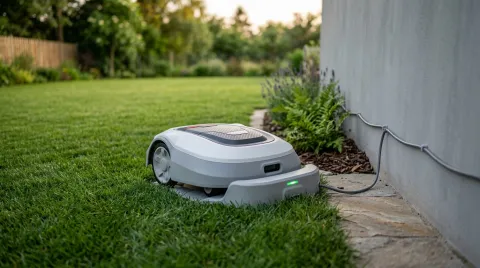
Most docking failures come down to something in the way, a moved or badly placed station, dirty contacts or sensors, or a weak positioning signal. Work through these checks in order.
What makers say about the life of a robot mower, its battery and its blades, what the warranties actually cover, and the care that makes the biggest difference.
PIN locks, lift alarms, GPS tracking, geofences and 4G: the anti-theft features of current robot mowers compared, plus the simple habits that make yours a poor target.
Most robot mowers are waterproof enough to be left outside, and many return home when it rains. Whether they should mow wet grass is a different question. What the ratings mean and how to set yours up.